Colorado’s Rocky Mountain range offers some of the finest freshwater fishing on the continent. From blue-ribbon tailwaters and high alpine lakes to sprawling reservoirs and remote canyon rivers, the variety here is unmatched. Whether you prefer a fly rod or spinning gear, solitude or guided access, there is a stretch of water in this state that fits exactly what you are looking for.
At Kirks Flyshop Grand Lake, we have spent more than two decades fishing, guiding, and studying these waters from our base on the western slope of Rocky Mountain National Park. This guide covers 21 of the best places to fish in Colorado, with honest assessments of what each destination offers, what species to expect, and what time of year to plan your trip.

Table of Contents
- Colorado River
- South Platte River
- Gunnison River
- Rocky Mountain National Park
- Arkansas River
- Roaring Fork River
- Big Thompson River
- Spinney Mountain Reservoir
- Fryingpan River
- Blue River
- Rio Grande River
- Eleven Mile Reservoir
- Grand Lake, Lake Granby & Shadow Mountain
- Animas River
- Clear Creek
- Taylor River
- Blue Mesa Reservoir
- Chatfield Reservoir
- Vallecito Reservoir
- McPhee Reservoir
- Eagle River
Our Home Water
1. Colorado River
Best Season: June through October (float); year-round (wade)
Best For: Float fishing, wade fishing, scenic canyon runs
Access: Public throughout; guided float trips for best water
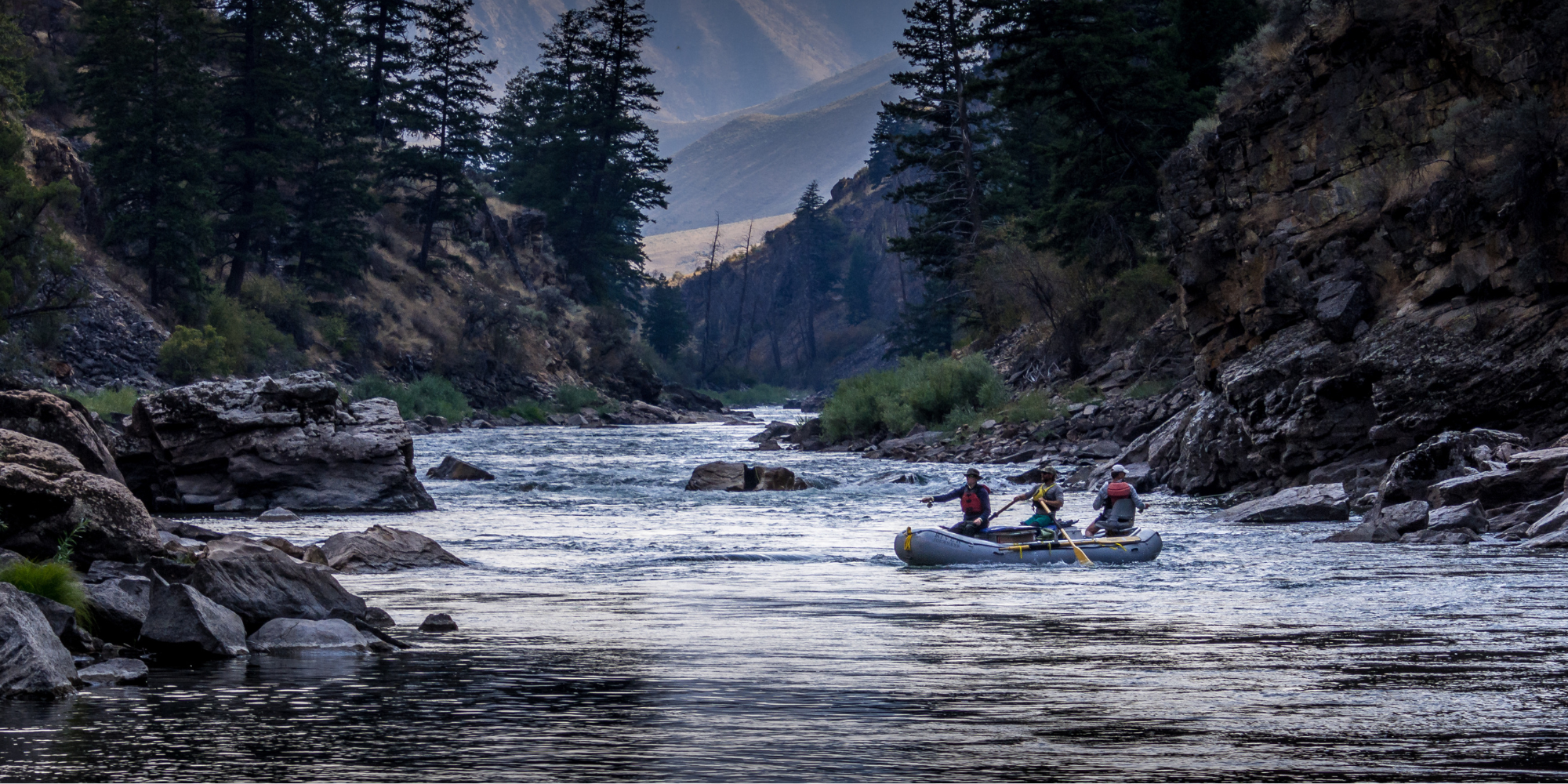
One of America’s most iconic watersheds, the Colorado River originates on the Continental Divide in Rocky Mountain National Park, just upstream of Grand Lake, before flowing through seven states and ultimately reaching the Gulf of California. Along its 1,450-mile path it serves as a water source for an estimated 35 to 40 million people, but the section that concerns anglers runs from the headwaters near Grand Lake downstream to the town of Rifle.
From our Grand Lake fly shop, we spend considerable time on the upper river through Rocky Mountain National Park and below Lake Granby, where clear water, classic riffles, and pocket water hold wild trout throughout the warmer months. For float anglers, the Gore Canyon section near Kremmling is the standout destination: dramatic canyon walls, a productive mix of whitewater and deep holding lies, and fish surveys in some years showing 4,000 to 5,000 trout per mile.
For anglers new to this river, our guided Colorado River float trips are the most effective way to learn the water, the hatches, and the right techniques for each section.
2. South Platte River
Best Season: Year-round on the Dream Stream; spring and fall for hatches
Best For: Trophy trout, technical dry fly, proximity to Denver
Access: Excellent public access throughout
The South Platte River is one of Colorado’s most celebrated fly fishing destinations, driven in large part by the fame of its Dream Stream section between Spinney Mountain and Eleven Mile Reservoirs. Trophy-sized trout, epic PMD and caddis hatches, and wide-open meadow water make it a bucket-list destination for serious anglers. Cheesman Canyon and the Deckers area round out the South Platte experience with more technical canyon water and abundant public access within easy reach of the Denver metro area.
3. Gunnison River
Best Season: Late spring through fall; tailwater sections fish year-round
Best For: Large wild trout, dramatic scenery, Gold Medal water
Access: Varies; Black Canyon requires rappelling; lower canyon is float-accessible
The Gunnison River is home to some of the most dramatic scenery and most rewarding trout fishing in Colorado. The Black Canyon section is legendary among adventurous anglers: accessing it requires rappelling into the gorge, but those who make the effort find large wild trout in virtually unfished water. Beyond the canyon, the Lower Gunnison features 39 miles of Gold Medal water from Blue Mesa Reservoir to Delta, while the Upper Gunnison between Taylor Park Reservoir and Blue Mesa offers a variety of species and exceptional trophy opportunities. Nymphs, streamers, and dry flies all produce depending on the season; float fishing is popular on the more accessible lower sections.
Our Home Water
4. Rocky Mountain National Park
Best Season: Late June through September (high country); Big Thompson tailwater year-round
Best For: Wild Cutthroat on dry flies, alpine scenery, backcountry lakes
Access: Timed Entry Permit required May through mid-October; artificial flies and lures only
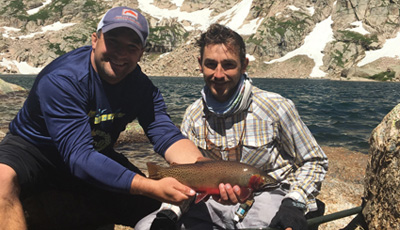
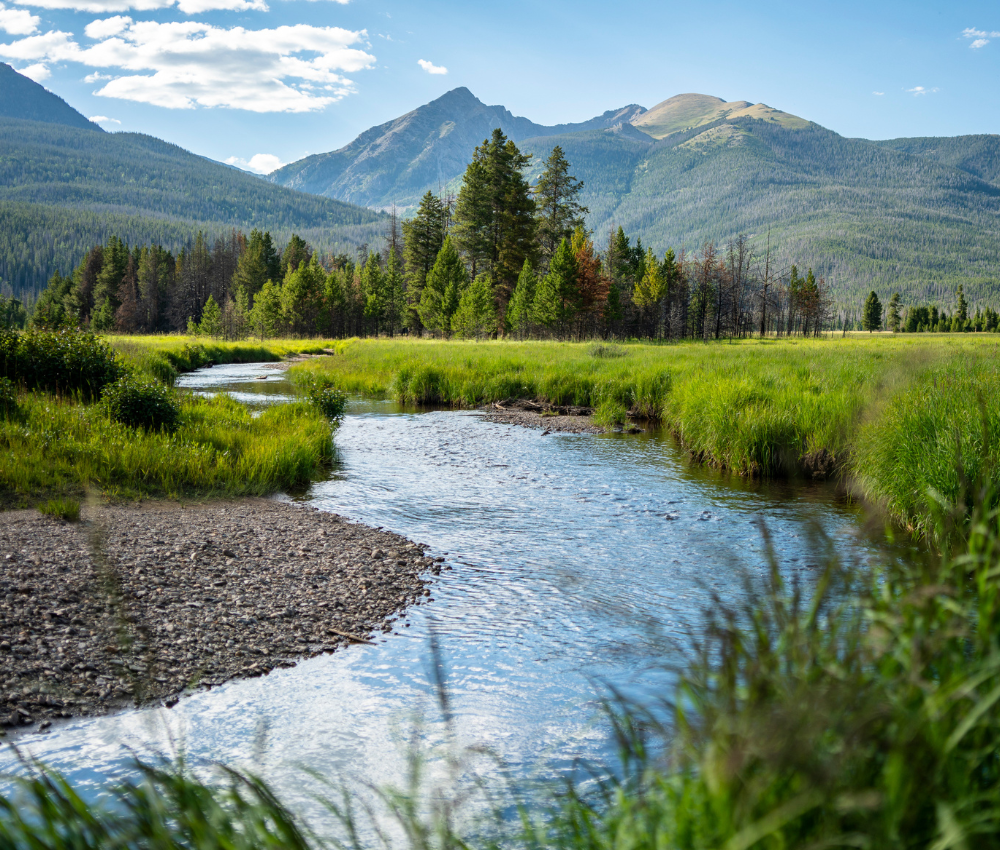
Rocky Mountain National Park is what draws many anglers to our corner of Colorado. With over 150 miles of fishable streams and dozens of alpine lakes, the variety here is genuinely exceptional. The Greenback Cutthroat, once thought to be extinct in the area, now thrives in select streams and lakes within the park, offering a rare and memorable catch for those willing to hike. The upper Big Thompson River, upper Colorado River, Cache la Poudre River headwaters, and numerous smaller creeks all hold wild fish in spectacular settings.
The park rewards effort. The further you hike from the trailhead, the more productive and less pressured the fishing becomes. For those who want to maximize their time in the park, our guided fly fishing trips into Rocky Mountain National Park put you on the right water at the right time, with a guide who knows every run.
5. Arkansas River
Best Season: Summer and fall on the upper freestone; tailwater fishes year-round
Best For: Classic Colorado freestone experience, tailwater trophy trout
Access: Strong public access throughout; Brown’s Canyon is a National Monument
The Arkansas River offers a full range of Colorado angling experiences from its headwaters near Leadville all the way to the tailwater below Pueblo Reservoir. Famous sections like Browns Canyon, Bighorn Canyon, and Royal Gorge are known as much for their Class IV whitewater as their trout, but determined anglers find solid fishing throughout. Below Pueblo Reservoir, the tailwater section produces large trout on dry flies and nymphs in a more typical spring creek setting, while spin anglers working the deeper holes of the upper freestone can find exceptional fish throughout the summer months.
6. Roaring Fork River
Best Season: Late spring through fall; summer and fall for dry flies
Best For: Gold Medal water, float fishing below Carbondale
Access: Good public access on upper section; drift boat recommended below Carbondale
The Roaring Fork River flows from its headwaters above Aspen to its confluence with the Colorado River in Glenwood Springs, and its Gold Medal designation covers some of the finest trout water in the state. The upper section above Basalt offers classic wade fishing in a stunning alpine valley, while the lower section below Carbondale opens up into deeper, slower runs best covered by drift boat. Brown trout are the primary target, with rainbows and brooks mixed throughout. The river’s proximity to Aspen means it sees significant pressure on summer weekends; early mornings and weekday trips offer a better experience.
Our Home Water
7. Big Thompson River
Best Season: Lower tailwater fishes year-round; upper section best June through September
Best For: Year-round trophy tailwater fishing; alpine scenery in upper reaches
Access: Excellent public and private water options; walk-and-wade throughout
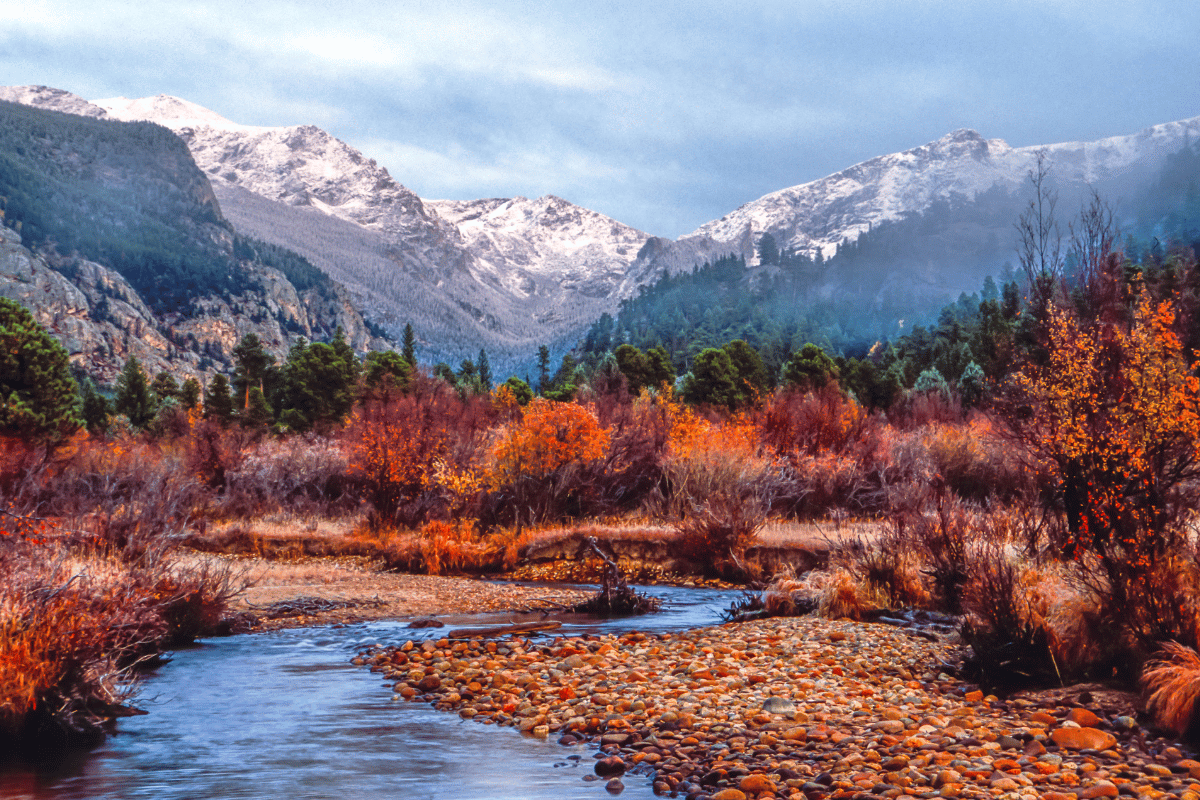
The Big Thompson River flows from Rocky Mountain National Park to the eastern plains and offers two very different fishing experiences depending on which section you fish. The upper river inside the park holds brown trout, cutthroat, and brook trout in smaller sizes against a backdrop of the most spectacular mountain scenery in Colorado. The lower tailwater below Lake Estes is one of the finest year-round fisheries in the Rocky Mountain West, with large wild Brown and Rainbow Trout, consistent cold-water temperatures from the dam, and excellent midge and baetis hatches even through the winter months.
Our Estes Park guided fly fishing trips target both sections depending on season and conditions. We guarantee you will catch fish.
8. Spinney Mountain Reservoir
Best Season: Spring and fall; ice fishing in winter
Best For: Large stillwater trout, northern pike on streamers, stillwater fly fishing
Access: Boat access strongly recommended; shore fishing possible by walking the shallows
Spinney Mountain Reservoir sits west of Colorado Springs at high elevation and covers approximately 2,500 surface acres, making it one of the larger stillwater trout destinations on the Front Range. Rainbow trout grow to impressive sizes here, fed by abundant chironomid populations and a healthy aquatic food chain. Northern pike are also present and provide exciting streamer fishing for those specifically targeting them. Fly anglers fish nymphs, streamers, and chironomid patterns effectively, while spin anglers do well with spoons, spinners, and crankbaits along the shoreline structure.
9. Fryingpan River
Best Season: Year-round below Ruedi Reservoir; summer and fall on the upper freestone
Best For: Trophy tailwater trout, consistent hatches, year-round accessibility
Access: Numerous pull-offs and public access points along the entire tailwater section
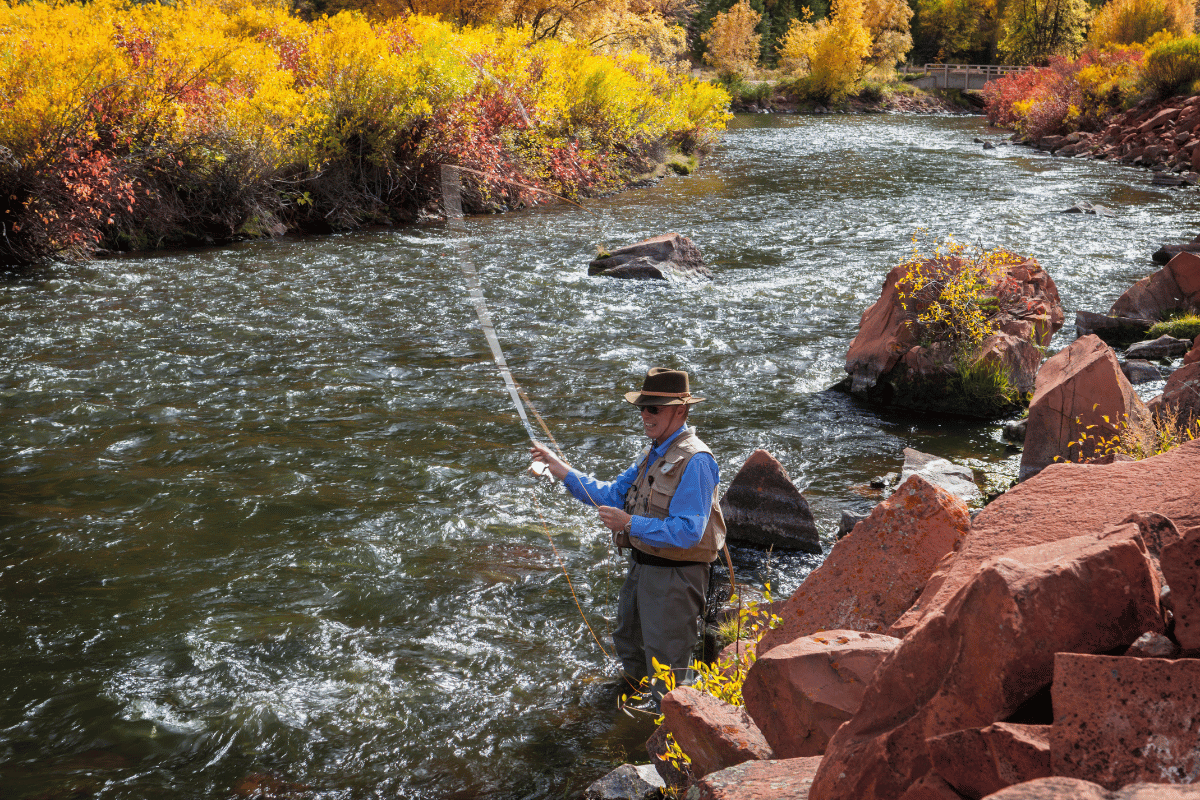
The Fryingpan River is one of Colorado’s most storied tailwaters, known particularly for the large rainbow and brown trout that hold in the Gold Medal section below Ruedi Reservoir. Mysis shrimp washed through the dam provide a rich food source that produces outsized fish relative to the river’s modest size. The tailwater fishes well year-round with nymphs, dry flies, and small streamers, while the upper freestone section above the reservoir takes on more classic mountain stream character with wild trout, vegetated banks, and productive pocket water. Spin anglers find consistent results with small spinners and spoons throughout both sections.
10. Blue River
Best Season: Year-round below Dillon Reservoir; summer on upper and middle sections
Best For: Trophy tailwater trout, technical midge and mayfly fishing
Access: Excellent public access through the town of Silverthorne; good access on upper and middle sections
The Blue River flows through four distinct sections, each offering a different character. Most anglers focus on the Gold Medal tailwater below Dillon Reservoir as it passes through the town of Silverthorne, where consistent cold water from the dam sustains populations of very large trout. Small midge and mayfly imitations in sizes 18 through 24 are the foundation of success here, though conditions occasionally allow for exceptional dry fly opportunities. The upper Blue near Breckenridge offers high-country creek character, while the Green Mountain Reservoir sections provide a wilder, more remote experience.
11. Rio Grande River
Best Season: Summer through fall; float season typically June through September
Best For: Large brown trout, float fishing, Southwest Colorado scenery
Access: Good public access; float fishing from Box Canyon to Del Norte is the primary option for the best water
Originating in the San Juan Mountains of Southwest Colorado, the Rio Grande is one of the state’s largest rivers and one of its most underrated trout fisheries. The section from Box Canyon below the reservoir to Del Norte is the primary focus for anglers, where large brown trout hold in deep runs and are best accessed by float boat. A variety of techniques work depending on conditions, from small dry flies during hatch periods to nymphs and streamers for the larger resident browns. For anglers who want a legitimate shot at some of Colorado’s biggest trout in a less-pressured setting, the Rio Grande deserves serious consideration.
12. Eleven Mile Reservoir
Best Season: Spring and fall; ice fishing in winter
Best For: Stillwater fly fishing, Kokanee salmon, diverse multi-species opportunity
Access: Boat strongly recommended; shore fishing possible along defined access areas
Eleven Mile Reservoir anchors the southern end of the Dream Stream and forms the upper arm of the South Platte drainage. Boat anglers do best by trolling in the depths for Kokanee and larger trout, or targeting the shallow flats and drop-offs where trout cruise for chironomids, leeches, mayflies, and baitfish. Shore fishing is possible by covering water along the defined access areas, with cast-and-retrieve presentations or float rigs producing consistent results for rainbow and brown trout throughout the season.
Our Home Water
13. Grand Lake, Lake Granby, and Shadow Mountain Reservoir
Best Season: May through June (ice-off, prime for lake trout); summer for rainbows; fall for Kokanee; winter ice fishing
Best For: Trophy lake trout, Kokanee salmon, diverse lake fishing, ice fishing
Access: Boat strongly recommended for Grand Lake and Lake Granby; Shadow Mountain has good shore access near the dam in spring
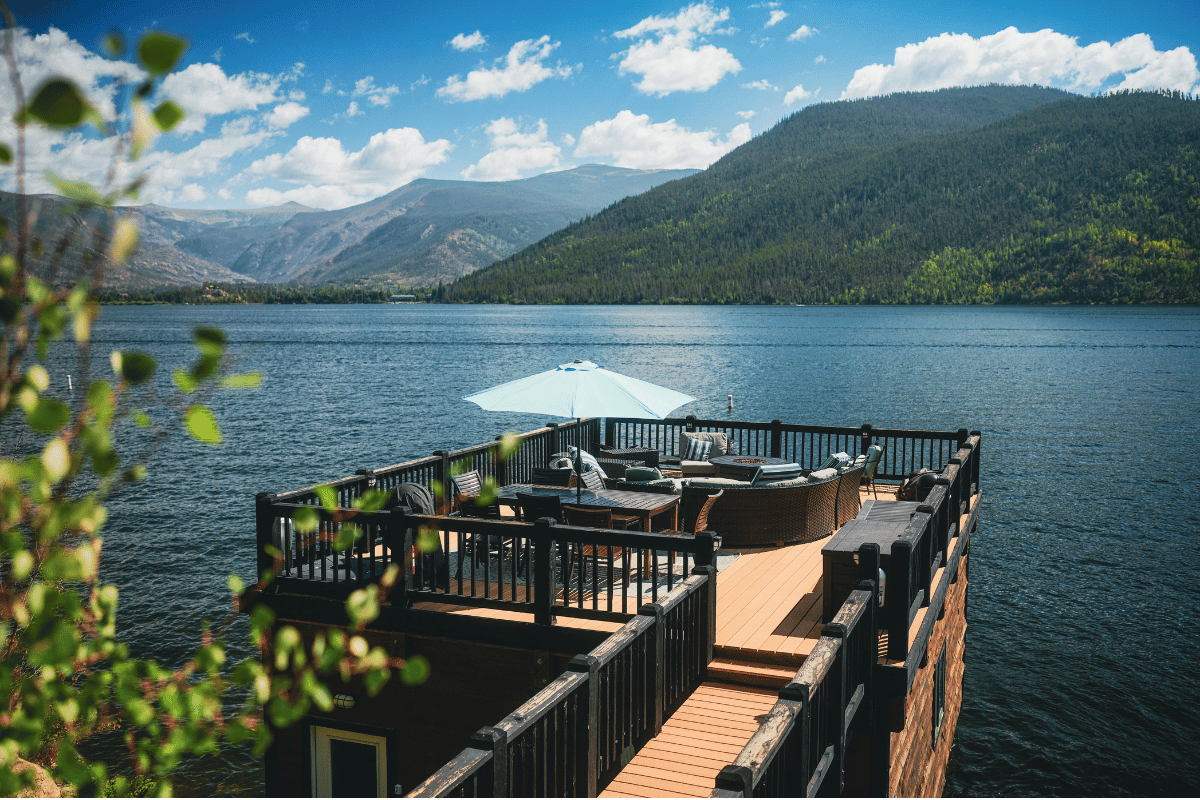
These three connected bodies of water sit at the heart of Grand County and collectively represent one of the best lake fishing complexes in Colorado. Grand Lake, at approximately 500 acres and up to 265 feet deep, is the crown jewel: Colorado’s largest natural lake and home to trophy lake trout that draw dedicated anglers from across the country. Lake Granby, the largest of the three at over 7,000 acres, offers similar lake trout opportunities in addition to strong Kokanee salmon and rainbow trout populations. Shadow Mountain Reservoir connects the two and shines in early season, particularly near the dam for large brown trout before summer weed growth limits shore access.
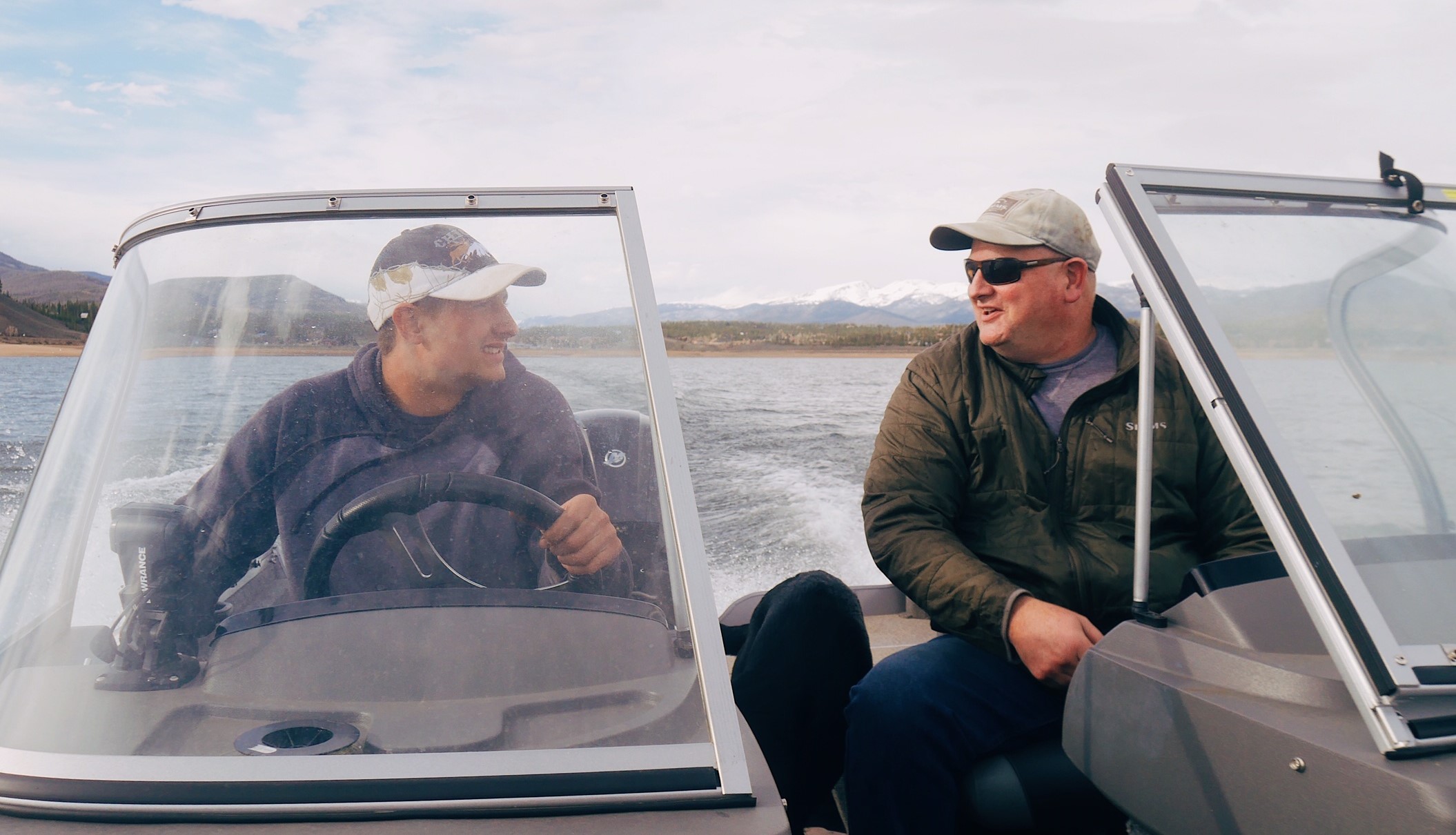
Because these waters are best explored over multiple days, they are a natural fit for a multi-day Colorado fishing trip based out of Grand Lake. Our Grand Lake Fishing Charters use modern electronics to find active fish in all three lakes, with all gear, tackle, and boats included. We also extend our charters to Williams Fork Reservoir and Wolford Mountain Reservoir for anglers wanting to explore more of the region.
For a full breakdown of techniques, species, and seasonal timing, see our detailed guide: Grand Lake vs. Shadow Mountain Reservoir: Where to Fish in Grand County.
14. Animas River
Best Season: Late spring through fall; dry fly season peaks in summer
Best For: Float fishing, large brown trout near Durango, small stream fishing near Silverton
Access: Approximately 7 miles of wade access through Durango; upper river accessible near Silverton
Flowing from the Needle Mountains through the historic town of Durango, the Animas River delivers a true Southwest Colorado fishing experience. The section near Durango is a large river with float fishing as the primary option for covering the most productive water, with exceptional brown trout that can reach impressive sizes. Wade anglers have access to roughly 7 miles of river through town. Those seeking a more intimate experience head toward Silverton, where the upper Animas becomes a small stream with light rods, dry flies, and the kind of remote mountain scenery that is hard to find anywhere else in the state.
15. Clear Creek
Best Season: Late spring through fall; best after runoff clears
Best For: Convenient Front Range access, classic mountain creek fishing
Access: Excellent access along Highway 6 through Clear Creek Canyon; very easy from I-70
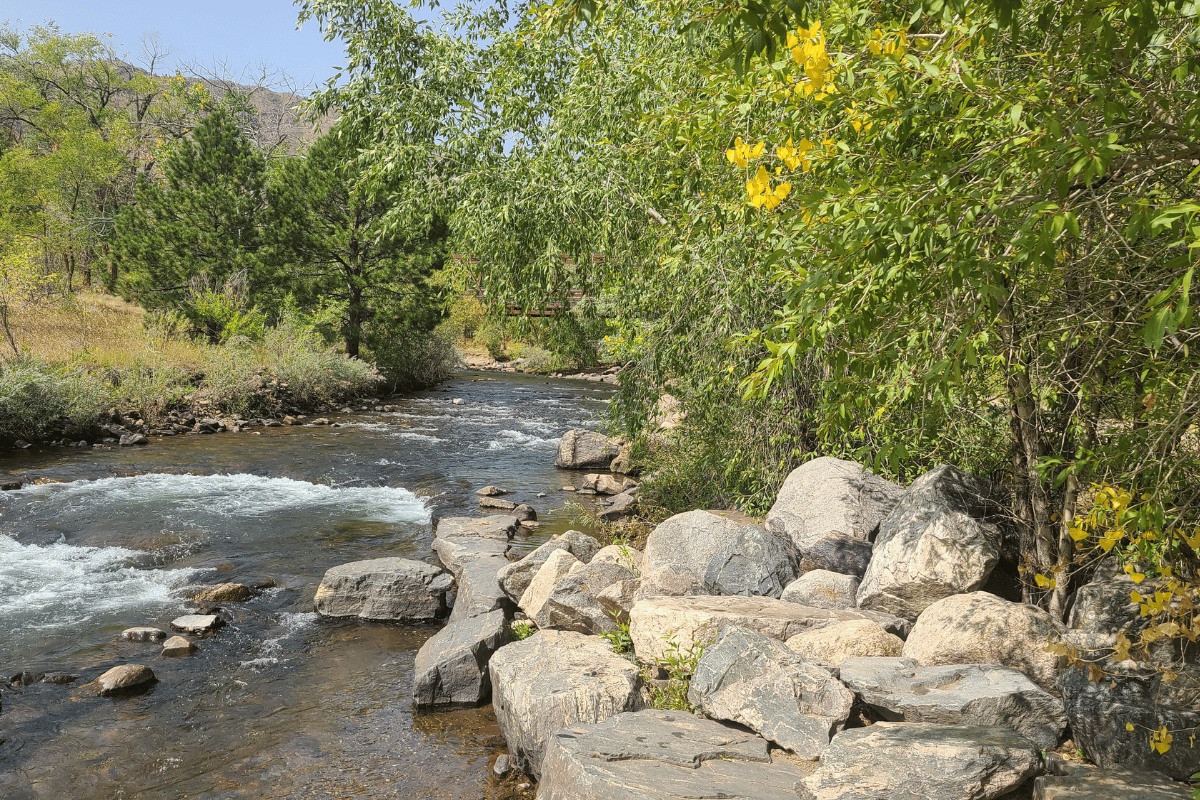
Clear Creek is the most accessible mountain stream fishery for anglers based in the Denver metro area. While it does not produce the large fish found on Colorado’s famous tailwaters, it delivers classic mountain stream character: bouldery plunge pools, fast riffles, and the kind of quick escape from the city that anglers living along the Front Range need. Highway 6 through Clear Creek Canyon provides simple pull-off access along much of the canyon. Dry flies, nymphs, and small lures like Rooster Tails and Kastmasters all produce throughout the season.
16. Taylor River
Best Season: Year-round below Taylor Park Reservoir
Best For: Trophy tailwater trout, consistent year-round access, Mysis shrimp presentations
Access: 11 miles of publicly accessible shoreline at seven designated river sections below the dam
The Taylor River’s 20-mile tailwater section below Taylor Park Reservoir is one of the most consistent trophy trout fisheries in Colorado, producing large rainbow and brown trout year-round thanks to cold, stable dam releases. The Taylor Dam itself, commonly called the “Hog Trough,” is justifiably popular for its concentration of large fish, but the best combination of solitude and quality fishing is typically found at the multiple access points downstream. Mysis shrimp imitations are the dominant subsurface approach below the dam, though dry fly conditions can be excellent when the right hatches occur. The river fishes in all seasons, making it a reliable destination when other waters are in runoff or difficult conditions.
17. Blue Mesa Reservoir
Best Season: Spring and fall for Kokanee and lake trout; summer for rainbow and brown trout
Best For: Trophy lake trout, Kokanee salmon trolling, large-scale stillwater adventure
Access: 96 miles of shoreline provides excellent shore access; boat strongly recommended for lake trout and Kokanee
Blue Mesa Reservoir is Colorado’s largest body of water at approximately 9,000 surface acres, and it supports one of the state’s most diverse lake fisheries. Lake trout can reach trophy sizes here, with documented catches exceeding 50 lbs in past seasons. Kokanee salmon are a major draw in the summer and fall, with trolling as the primary technique for both species. Shore anglers have access to 96 miles of bank, making this one of the most accessible large-reservoir fisheries in the state for those without boats. Cast-and-retrieve approaches with small spoons or lures, float rigs, and bait produce consistent results from the shore throughout the season.
18. Chatfield Reservoir
Best Season: Spring and fall for bass and walleye; winter for stocked trout
Best For: Diverse warm and coldwater fishing, proximity to Denver
Access: Boat ramp and shore access; day-use fees apply
Located just southwest of Denver, Chatfield Reservoir offers something relatively uncommon in Colorado: a genuinely productive warm and coldwater mixed fishery within easy reach of the metro area. Smallmouth and largemouth bass are the primary draw for spin anglers, with crankbaits, jigs, and spinners producing well around the reservoir’s structure and coves. Fly fishing is most productive for trout in the cooler months using streamers and nymphs. The reservoir’s combination of diverse species and easy access makes it a convenient option for anglers who cannot make the drive to more remote mountain destinations.
19. Vallecito Reservoir
Best Season: Spring and summer for trout; summer for bass and pike
Best For: Multi-species fishing, scenic Southwest Colorado setting
Access: Boat access recommended; shore fishing available at several points
Vallecito Reservoir in Southwest Colorado near Durango supports a genuinely diverse mix of species, making it an ideal destination for anglers who want to vary their approach throughout the day. Rainbow and brown trout are the primary coldwater targets, while smallmouth bass, walleye, and northern pike provide opportunities for anglers comfortable mixing techniques. Boat anglers do best with trolling, casting, jigging, and bait presentations depending on the target species. Kokanee salmon populations have struggled in recent years, so most anglers shift focus to the other species that remain abundant.
20. McPhee Reservoir
Best Season: Spring and summer for bass; year-round for trout and panfish
Best For: Smallmouth bass, panfish variety, Colorado’s second-largest reservoir
Access: Multiple boat ramps; shore access along rocky shorelines and creek arms
Colorado’s second-largest reservoir at 4,470 surface acres, McPhee sits in Mesa Verde country in the Four Corners region and delivers a mixed warm and coldwater fishery unlike anywhere else in the state. Smallmouth bass are the star attraction, with rocky shorelines and creek arms producing consistent action on a variety of lures. Healthy crappie and yellow perch populations keep panfish anglers busy, while occasional largemouth bass and walleye add to the variety. Come to McPhee with a range of lures and techniques, as the species diversity rewards anglers who adapt throughout the day.
21. Eagle River
Best Season: Late spring through fall; best after runoff recedes in June
Best For: Classic freestone fishing, stonefly and caddis hatches, I-70 corridor access
Access: Strong public access along I-70 between Minturn and Gypsum
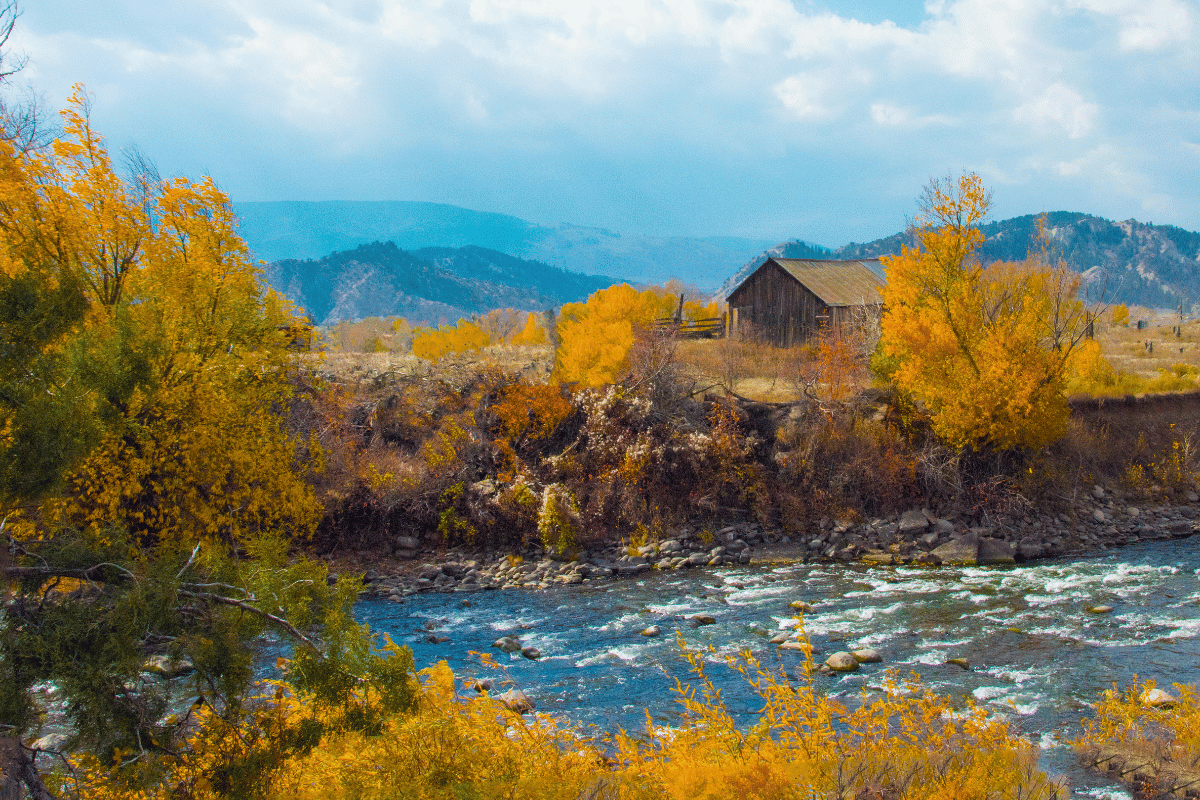
The Eagle River flows through one of Colorado’s most scenic mountain corridors, passing near Vail and Beaver Creek before joining the Colorado River at Dotsero. Its freestone character means genuine seasonal hatches, including prolific stonefly, mayfly, and caddis activity that drive aggressive surface feeding from brown and rainbow trout throughout the warmer months. The best access is found along the I-70 corridor between Minturn and Gypsum, with the upper river above its confluence with Gore Creek offering more intimate, smaller-water fishing. The Eagle is not known for trophy-sized trout, but it delivers a rewarding, authentic Colorado stream experience close to major mountain resort communities.
Fish Grand County With an Expert Local Guide
Kirks Flyshop Grand Lake is the western slope’s premier fly shop and full-service guide operation. Our guides know Grand County’s waters better than anyone, from the depths of Grand Lake and the Colorado River headwaters to the alpine streams of Rocky Mountain National Park.
- Grand Lake Fishing Charters — 4-hour and 8-hour lake trips for Rainbow, Brown, and Lake Trout
- Guided Fly Fishing — RMNP streams, Colorado River, and local waters; all skill levels
- Colorado River Float Trips — Half-day, full-day, and overnight options through Gore Canyon
- Ice Fishing Trips and Rentals — Winter lake trout on Grand Lake
- Backpacking and Fly Fishing — Multi-day backcountry adventures into RMNP
- Current Fishing Report — Updated regularly by our guides
Frequently Asked Questions About Fishing in Colorado
What are the best places to fish in Colorado?
Where is the best trout fishing in Colorado?
Where can I fish for lake trout in Colorado?
What fish can you catch in Rocky Mountain National Park?
Do you need a fishing license to fish in Colorado?
What is the best time of year to fish in Colorado?
Can I hire a fishing guide near Grand Lake, Colorado?
What is Gold Medal water in Colorado?
Updated regularly by the guides and staff at Kirks Flyshop Grand Lake, Grand County’s premier fly shop, bait and tackle shop, and full-service fishing guide operation. Located in downtown Grand Lake, Colorado. Questions? Call us at (970) 627-5021 or check our current fishing report.