Grand Lake vs. Shadow Mountain Reservoir: Where to Fish in Grand County
Grand County, Colorado is one of the most fish-rich corners of the Rocky Mountain West, and two of its standout waters sit practically side by side. Grand Lake and Shadow Mountain Reservoir are separated by a narrow channel and the iconic Rainbow Bridge, yet they fish completely differently. Ask a local which is better and you’ll get a different answer depending on the season, the species you’re chasing, and whether you’re willing to bring a boat.
At Kirks Flyshop Grand Lake, Colorado’s premier fly shop and guide service on the western slope of Rocky Mountain National Park, our guides fish both of these waters constantly. This guide covers everything you need to know: species, access, seasons, techniques, and when to choose one over the other.
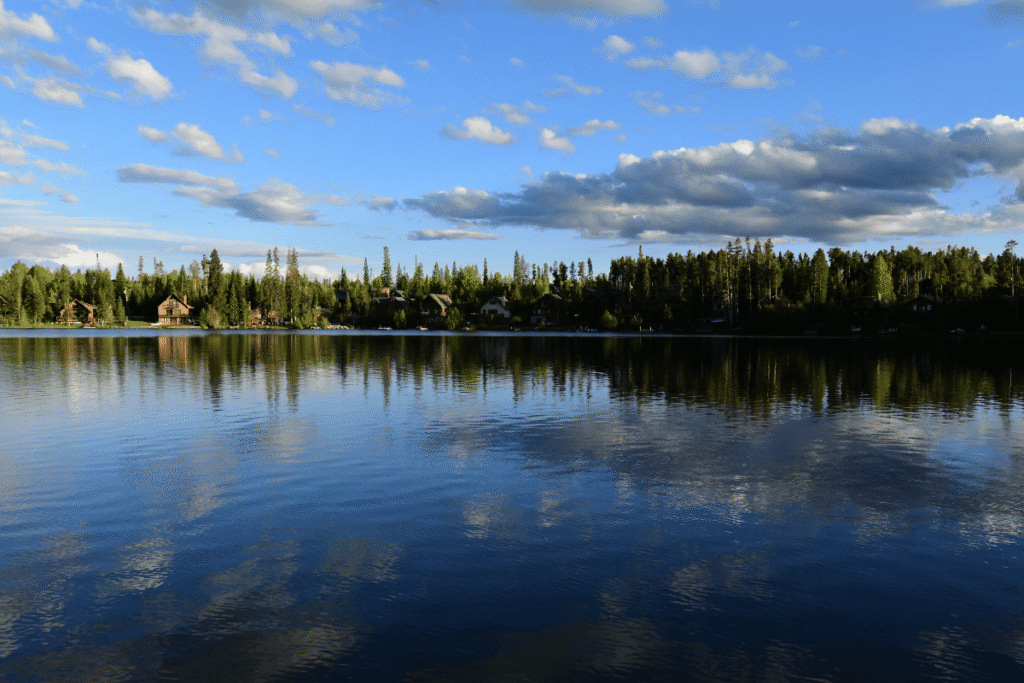
Quick Comparison: Which Water Is Right for You?
Grand Lake is Colorado’s largest natural lake and one of its deepest, making it the premier destination for trophy Lake Trout (Mackinaw), Rainbow Trout, Brown Trout, and Kokanee Salmon. A boat is strongly recommended to reach the deep water where lake trout live most of the year. Shadow Mountain Reservoir, by contrast, is a shallower man-made impoundment that excels in early season for large Brown and Rainbow Trout near the dam, with good shore and fly fishing access before summer weeds set in. The two are physically connected and often fished together, but each has a season, method, and species where it truly stands apart.
| Category | Grand Lake | Shadow Mountain Reservoir |
|---|---|---|
| Water Type | Natural lake, Colorado’s largest at ~500 acres | Man-made reservoir, ~1,300 acres |
| Depth | Up to 265 feet, one of Colorado’s deepest | Shallow, max ~20 feet; averages much less |
| Primary Species | Lake Trout (Mackinaw), Rainbow Trout, Brown Trout, Kokanee Salmon | Brown Trout, Rainbow Trout, Cutthroat, Brook Trout, Lake Trout (near dam) |
| Best Season | Year-round; peak May–June (ice-off) and summer | Early season (May–June) is prime; weeds hamper summer shore fishing |
| Best Method | Boat trolling, jigging deep for lake trout; casting hardware for rainbows | Fly fishing and spinning near dam; fly fishing the outflow below |
| Shore Fishing | Yes, Point Park and docks; best early season | Yes, near dam in spring and early summer; weed growth limits access by July |
| Boat Required? | Strongly recommended for lake trout targeting | No, but a boat helps; non-motorized and motorized both allowed |
| Fly Fishing? | Yes, leech patterns and streamers near inlets and shallows | Yes, near dam and east shoreline; excellent below dam on the Colorado River |
| Connected? | Yes, connected to Shadow Mountain via Rainbow Bridge channel | Yes, connects to Grand Lake and flows into Lake Granby via Colorado River |
| Guided Trips | Fishing Charters from Kirks Flyshop Grand Lake | Guided Fly Fishing from Kirks Flyshop Grand Lake |
Note: Always check current conditions at before your trip.
Grand Lake, Colorado: Deep Water, Trophy Trout, and Kokanee Salmon
About the Lake
Colorado’s largest natural lake covers approximately 500 acres and plunges to depths of up to 265 feet, making it one of the deepest bodies of water in the state and ideal habitat for cold-water species that thrive far below the surface. The town of Grand Lake sits on its northern shore and serves as the western gateway to Rocky Mountain National Park, giving visiting anglers access to both world-class lake fishing and excellent stream and alpine fishing within a short drive.
A narrow waterway flowing under the Rainbow Bridge connects it to Shadow Mountain Reservoir, and fish move between the two systems regularly. This is especially relevant when targeting lake trout, which roam widely between the two bodies of water.
What Species Will You Catch?
- Lake Trout (Mackinaw): The trophy species. These fish grow to substantial sizes and hold in deep water (35–100+ feet) for most of the year, moving shallower only near ice-off in spring. They’re the primary draw for dedicated anglers who travel from across the country.
- Rainbow Trout: Abundant and regularly stocked by Colorado Parks & Wildlife; accessible from shore or by boat, particularly near the two inlets where fish concentrate to feed.
- Brown Trout: Present in good numbers with fish reaching impressive sizes. Browns are most active near the surface and shoreline during low-light periods, with early mornings and evenings being prime.
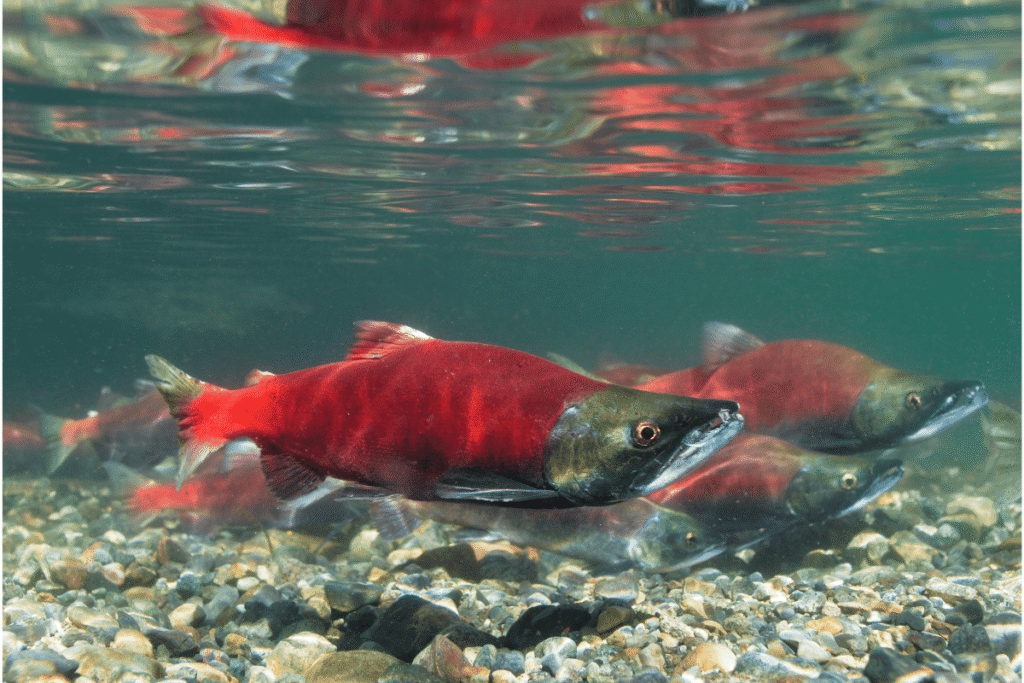
- Kokanee Salmon: A beloved landlocked species that draws anglers specifically during their late-summer and fall spawning runs. Our guides have landed five species in a single day here, including Kokanee.
Best Fishing Techniques
Trolling for Lake Trout
Deep trolling is the most effective approach for Mackinaw: running tube jigs, spoons, and live sucker meat down to 35–100 feet on downriggers or heavy lead. White and tan glitter tube jigs tipped with sucker meat are consistently productive. Fish are often located by electronics near large drop-offs and suspended over humps. Our Grand Lake Fishing Charters use modern electronics to find active fish and put anglers directly on them. For more on seasonal patterns and techniques, see our guide to lake trout fishing in Grand County.
Jigging for Lake Trout
When fish are found stacked on a hump or drop-off, vertical jigging with heavy spoons or jig heads tipped with sucker meat produces excellent results. Lake trout are known for subtle strikes, so pay close attention and keep reflexes sharp.
Shore and Dock Fishing for Rainbows and Browns
Point Park, near the north end where the lake connects to Shadow Mountain, is the primary shore access point. Colorado Parks & Wildlife stocks rainbows here early in the season, making it an ideal family-friendly spot. Kastmasters, Tasmanian Devils, and small flutter spoons in blue and silver produce consistent results for rainbows and browns. Fly anglers who prefer the bank should strip leech patterns slowly along rocky shorelines in the early morning to find Brown Trout.
Fly Fishing
While this is primarily a trolling and jigging fishery for its largest species, fly anglers can find good action near the lake’s two inlets, where current draws feeding trout, and along rocky shorelines in low light. Leech patterns, woolly buggers, and bead-head nymphs all produce. For dedicated fly fishing, Shadow Mountain’s dam area and the Colorado River below it tend to be more rewarding.
Best Season for Fishing Grand Lake
- Ice-Off (May–June): Prime time for lake trout. After ice breaks up, these fish move into shallow water, sometimes as shallow as 10–15 feet, and feed aggressively before retreating to depth as water warms. This is the best window for shore anglers targeting Mackinaw.
- Summer (June–August): Rainbows and browns are most active early morning and evening near inlets and shorelines. Lake trout drop deeper (50–100 feet); downriggers or heavy jigging rigs are essential. Fish early on summer weekends to beat heavy boat traffic.
- Fall (September–October): Kokanee Salmon enter pre-spawn mode and become very catchable. Trout action picks up again as water temps cool. Lake trout remain in deeper water but are still very targetable.
- Winter Ice Fishing (December–March): One of the area’s premier ice fishing destinations. Lake trout are the primary target through the ice, and we offer Ice Fishing Trips and Rentals to put you on fish through the frozen surface.
Guided Fishing on Grand Lake
Our Grand Lake Fishing Charters use conventional trolling and jigging tackle to target Rainbow Trout, Brown Trout, and Lake Trout from guided boats. All tackle, gear, and the boat are included. Trips are available in 4-hour and 8-hour options and are great for all ages and skill levels, including families with young kids. We also extend charters to Williams Fork Reservoir and Wolford Mountain Reservoir for anglers who want to explore more of the region’s exceptional lake fisheries.
Shadow Mountain Reservoir: Prime Early-Season Trout and Fly Fishing Access
About the Reservoir
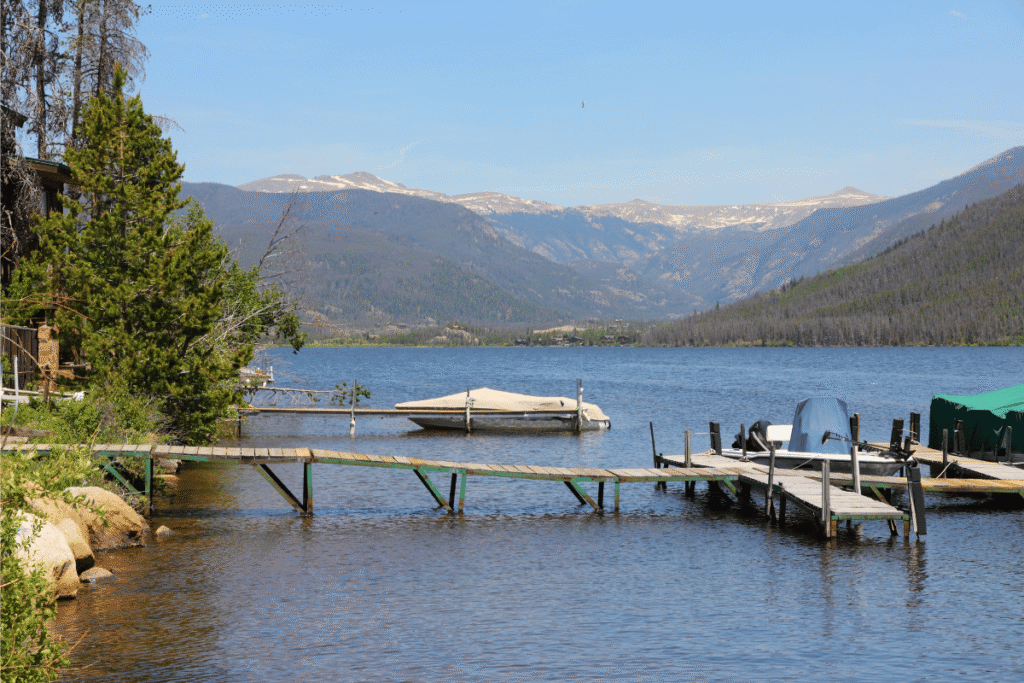
Shadow Mountain Reservoir is a man-made impoundment covering over 1,300 acres between Grand Lake and Lake Granby, sitting at an elevation of approximately 8,369 feet. Connected to the lake via the Rainbow Bridge channel, the reservoir’s east shore borders Rocky Mountain National Park, and Shadow Mountain Peak (10,155 feet), with its historic fire lookout tower, watches over the water from above.
The reservoir is shallower than its neighbor, reaching a maximum depth of around 20 feet. That shallowness warms the water more quickly in spring, drawing active fish to the surface earlier in the season. It also means weed growth becomes a challenge by mid-summer, particularly for shore anglers. Understanding this seasonal pattern is key to fishing it effectively.
The reservoir drains southward into Lake Granby via the Colorado River, which exits through the dam and flows two miles of productive, public-access stream fishing before reaching the lake below. This stretch is one of the most underrated pieces of trout water in the county.
What Species Will You Catch?
- Brown Trout: The star of this fishery. Large Browns concentrate near the dam area, especially in May and June. Browns here are known to reach impressive sizes and are the primary draw for early-season anglers.
- Rainbow Trout: Abundant throughout the reservoir and regularly stocked; accessible from shore and by boat, particularly near inlets.
- Cutthroat Trout: Present in the reservoir, particularly in areas where RMNP tributaries enter the east shore.
- Brook Trout: Found in shallower areas near the east shore, particularly where small tributary streams drain from Rocky Mountain National Park.
- Lake Trout: Occasional catches near the dam area, especially early in the season; much less common than in the deeper lake due to limited cold-water habitat.
- Kokanee Salmon and Splake: Also present; the mix of salmonid species makes this a genuinely diverse fishery worth exploring.
Best Fishing Techniques
Fly Fishing Near the Dam (May–June)
The Shadow Mountain Dam area is the most consistently productive fly fishing location on the reservoir, particularly from May through early July. Large Brown Trout hold near the structure, feeding on emerging insects and baitfish pushed through by currents. Woolly Buggers, Muddler Minnows, and streamer patterns fished near the dam face produce excellent results. Caddis and PMD dry flies work well during late-spring hatches on calm evenings.
Shore Fishing Early Season
May and June offer the best shore fishing before weed growth takes over. The dam area and the east shoreline along the East Shore Trail, accessible from the Jericho Road Trailhead and Green Ridge Campground, provide solid access. Spinners, Roostertails, and Kastmasters produce rainbow and brown trout for conventional anglers. For fly fishers, a dry-dropper rig or a nymph below a strike indicator is effective along the cleaner shoreline sections.
Trolling the Reservoir
Small motorized boats and kayaks can cover the water effectively by trolling Rapalas and Tasmanian Devils in the cooler months. As water warms in summer, weed growth makes trolling increasingly difficult in certain areas. Spring trolling along the eastern shoreline near park boundaries can be excellent for early-season browns and rainbows.
The Colorado River Below the Dam: Don’t Overlook This Stretch
One of the most productive and accessible fishing spots in the Grand Lake area is the Colorado River immediately below Shadow Mountain Dam. After leaving the reservoir, the river flows approximately two miles through public land before entering Lake Granby, and this stretch consistently holds a high concentration of Rainbow and Brown Trout, particularly in the pools and runs directly below the dam.
When flows run above 400 CFS, fish move up from Lake Granby and catch rates improve significantly. The further you hike from the parking area at the dam, the better the fishing typically gets.
- Techniques: Nymphing with Copper Johns, Pheasant Tails, and Hare’s Ear nymphs; spinning with Roostertails, Kastmasters, and spinners in natural colors
- Best Season: Late spring through early fall; most consistent at moderate to high flows (200–600 CFS)
- Access: Short walk from the parking area at the dam; trail follows the river down to Lake Granby
Best Season for Shadow Mountain Reservoir
- Spring / Early Season (May–June): Peak time. The dam area comes alive with large Brown Trout, weeds haven’t taken over yet, and Colorado Parks & Wildlife is actively stocking fish. This is when the reservoir outshines its neighbor for shore-based anglers and fly fishers.
- Summer (July–August): Weed growth significantly limits shore fishing options. Boat anglers can still find productive water, but most shore access becomes difficult after mid-July. Shift focus to the Colorado River below the dam or the Grand Lake inlets.
- Fall (September–October): As water cools and weeds die back, the reservoir rebounds nicely. Brown Trout become more aggressive ahead of spawn, and the Colorado River below the dam fishes exceptionally well with streamers.
- Winter: The reservoir freezes, limiting access. Ice fishing is possible but most winter anglers focus on the deeper lake and its established ice fishing infrastructure.
Beyond the Two Lakes: Other Nearby Waters Worth Knowing
Rocky Mountain National Park Streams and Alpine Lakes
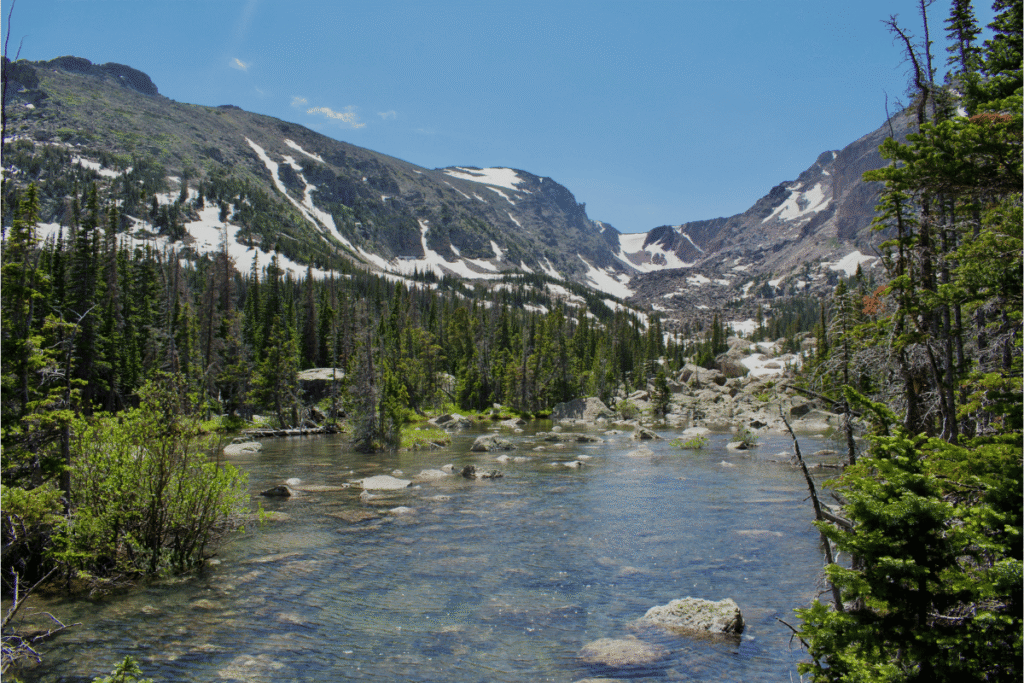
A short drive from town, RMNP’s western slope offers pristine fly fishing for wild Cutthroat, Brook, and Brown Trout in streams like the Colorado River headwaters, East Inlet Creek, and Glacier Creek, plus dozens of alpine lakes stocked with Cutthroat. East Inlet is one of the area’s best-kept secrets. Our flyshop offers guided fly fishing trips into Rocky Mountain National Park, as well as multi-day backpacking and fly fishing trips into the backcountry.
Colorado River at Byers Canyon and Pumphouse
For wade anglers willing to venture 20–30 minutes away, Byers Canyon near Hot Sulphur Springs offers adventurous access to excellent Brown and Rainbow Trout fishing on public water that sees far less pressure than the local lakes. Pumphouse, near Kremmling, is the launch point for our legendary Colorado River float trips, one of the finest full-day fishing experiences in the state.
Lake Granby
Just downstream, Lake Granby is one of the largest bodies of water in Colorado and holds trophy Lake Trout, Rainbow Trout, Kokanee Salmon, and even Northern Pike. The spillway on the northwest side, where water pours in from Shadow Mountain, concentrates fish and is a popular shore fishing location when the tunnel is releasing actively.
Book a Guided Fishing Trip With Us
Kirks Flyshop Grand Lake is the area’s premier fly shop, bait and tackle shop, and full-service guide operation. Whether you want to jig for trophy Lake Trout on a charter, fly fish the dam area at Shadow Mountain, wade the Colorado River below the reservoir, or explore Rocky Mountain National Park’s wild trout streams, our expert local guides have the experience, knowledge, and gear to make it happen.
- Fishing Charters: 4-hour and 8-hour lake trips for all species
- Guided Fly Fishing: RMNP streams, Colorado River, and local waters
- Colorado River Float Trips: Full-day and multi-day adventures
- Ice Fishing Trips and Rentals: Winter lake trout
- All gear, tackle, and licenses available at our Grand Lake fly shop
Frequently Asked Questions: Fishing in Grand Lake and Grand County
Is Grand Lake good for fishing?
Yes. As Colorado’s largest natural lake, it supports excellent populations of Lake Trout (Mackinaw), Rainbow Trout, Brown Trout, and Kokanee Salmon. It fishes year-round, including through the ice in winter. A boat is strongly recommended for targeting lake trout, which live in deep water for most of the year.
What fish can you catch in Grand Lake, Colorado?
Anglers can catch Lake Trout (Mackinaw), Rainbow Trout, Brown Trout, and Kokanee Salmon. Lake trout are found in deep water (35–100+ feet) and are best targeted by boat using jigging or trolling techniques. Rainbow and brown trout are accessible from shore at Point Park and near the lake’s inlets, particularly early in the season.
What is the best time to fish Grand Lake, Colorado?
Ice-off in May through early June is the prime window for lake trout, when they move into shallow water and feed aggressively. Summer offers consistent action for rainbow and brown trout near inlets and shorelines during early mornings and evenings. Fall is excellent for Kokanee Salmon and cooling-water trout activity. Ice fishing for lake trout runs from December through March.
Is Shadow Mountain Reservoir good for fishing?
Shadow Mountain Reservoir is an excellent early-season destination in Grand County, Colorado. From May through June, large Brown Trout concentrate near the dam and are accessible to fly anglers and spin fishers from shore. The reservoir also holds Rainbow Trout, Cutthroat Trout, Brook Trout, and occasional Lake Trout. As summer progresses, weed growth limits shore access, making the spring window the prime time to visit.
What is the difference between Grand Lake and Shadow Mountain Reservoir for fishing?
The two fisheries offer very different experiences. Grand Lake is deep (up to 265 feet), cold, and ideal for trophy Lake Trout, Rainbow Trout, Brown Trout, and Kokanee Salmon year-round, with boat fishing strongly recommended. Shadow Mountain Reservoir is shallow (max about 20 feet) and excels in early season (May–June) for large Brown Trout near the dam, with good shore and fly fishing access before summer weeds develop.
Can you fly fish on Grand Lake?
Yes, though it is primarily known as a trolling and jigging fishery for deep-water lake trout. For fly anglers, the best action is near the lake’s two inlets and along rocky shorelines during low-light periods using leech patterns and streamers. For more traditional fly fishing, the Colorado River below Shadow Mountain Dam and the streams of Rocky Mountain National Park offer better options nearby.
Where is the best shore fishing near Grand Lake, Colorado?
The best shore fishing options near Grand Lake include Point Park at the north end of the lake (where Colorado Parks and Wildlife stocks rainbow trout early in the season), the dam area at Shadow Mountain Reservoir (excellent for large Brown Trout in May and June), and the Colorado River below Shadow Mountain Dam, a productive two-mile stretch of public-access stream fishing for rainbow and brown trout.
Do you need a fishing license to fish in Grand Lake, Colorado?
Yes. A valid Colorado fishing license is required for all anglers age 16 and older. Licenses can be purchased online at cpw.state.co.us or in person at our shop in downtown Grand Lake before your trip.
Can you catch lake trout from shore at Grand Lake?
Yes, but most consistently near ice-off in May, when lake trout move into shallower water and can be caught from shore at Point Park and along the northern shoreline. After water temperatures rise in late spring, lake trout retreat to depth and a boat becomes essentially necessary for consistent success.
How do I book a guided fishing trip on Grand Lake?
We offer 4-hour and 8-hour fishing charters targeting Rainbow Trout, Brown Trout, and Lake Trout using conventional trolling and jigging tackle. All gear and tackle are provided. Trips can be booked by calling (970) 627-5021 or visiting here. Guided fly fishing and Colorado River float trips are also available.
Is the Colorado River below Shadow Mountain Dam good for fishing?
Yes, the Colorado River below Shadow Mountain Dam is one of the most productive and underrated fishing spots in the area. The two-mile stretch of public-access river between the dam and Lake Granby consistently holds a high concentration of Rainbow and Brown Trout, especially in the pools below the dam. When flows exceed 400 CFS, fish move up from Lake Granby and fishing improves significantly.